Clinical research generates enormous amounts of data.
Study information may move across electronic data capture platforms, clinical trial management systems, safety databases, regulatory systems, laboratory environments, analytics tools, and other applications throughout the research lifecycle.
Each system may serve an important purpose. But when those systems cannot communicate effectively, the information within them can become fragmented.
Teams may spend valuable time transferring data manually, reconciling records, correcting inconsistencies, or entering the same information into multiple platforms. Instead of supporting faster decisions, technology can introduce another layer of complexity.
For life sciences organizations working to accelerate research, the challenge is no longer simply collecting more data. It is ensuring that data can move accurately and efficiently across the systems where it is needed.
That is where interoperability becomes essential.
An interoperable, integrated technology environment can help organizations reduce duplicate data, improve access to accurate information, streamline workflows, and create a stronger foundation for scientific discovery.
The Problem With Data Silos
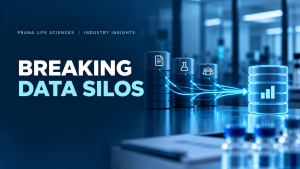
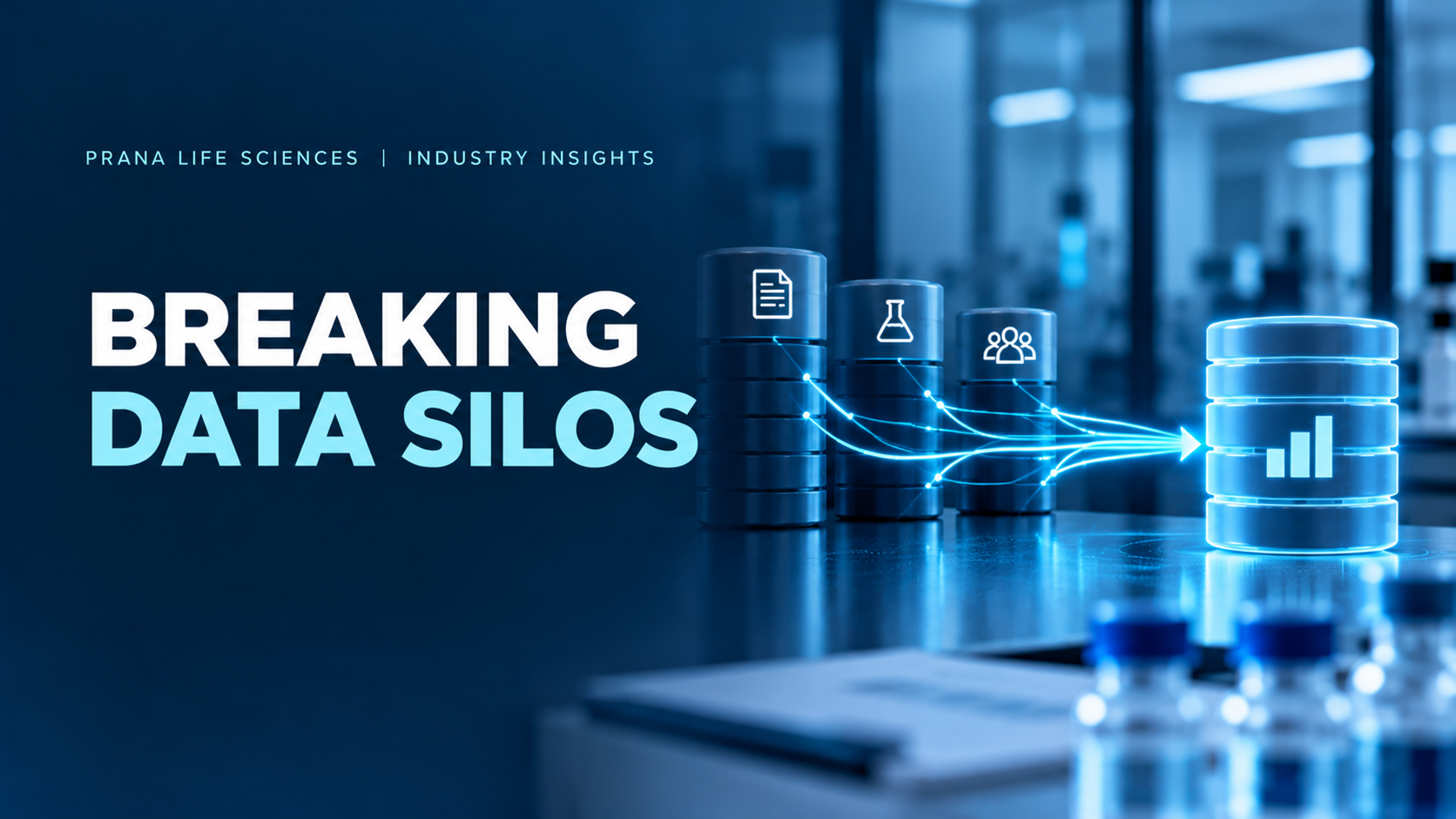
A data silo occurs when information is isolated within one system, department, or business function and cannot be easily accessed or used elsewhere.
In clinical research, silos can emerge naturally.
Different teams may adopt specialized platforms for clinical operations, regulatory activities, safety, quality, analytics, or other functions. Over time, organizations can build a technology ecosystem containing numerous systems that perform their individual roles effectively but do not exchange information efficiently.
The challenge becomes especially significant when the same information is needed across multiple functions.
If systems are disconnected, teams may rely on spreadsheets, manual uploads, emails, or duplicate data entry to bridge the gaps. Each additional handoff introduces more work and creates another opportunity for information to become delayed, inconsistent, or incomplete.
The result is not simply an IT problem.
Fragmented data can affect the people responsible for making clinical, operational, and regulatory decisions.
Interoperability Creates a Connected Data Environment
Interoperability is about more than connecting two applications.
Effective interoperability allows systems to exchange information in a way that makes the data usable, accurate, and available to the people and processes that need it.
Instead of treating each platform as an isolated repository, organizations can build an integrated environment where information moves between systems as part of a coordinated workflow.
For example, information generated in one clinical system may need to support downstream regulatory, safety, reporting, or analytics activities. When systems are integrated appropriately, that information can flow without requiring teams to repeatedly recreate or manually transfer it.
The result is a more connected technology ecosystem.
This is particularly important as life sciences organizations continue adopting specialized digital platforms. Adding another application may solve an immediate business need, but without an integration strategy, it can also create another silo.
Interoperability helps organizations gain value from individual technologies while ensuring those technologies function as part of a broader system.
Reducing Duplicate Data
Duplicate data is one of the most visible consequences of disconnected systems.
When applications cannot exchange information, the same data may need to be entered multiple times for different departments or processes.
That duplication creates inefficiency, but it also creates a larger question: Which version is correct?
If information changes in one system but not another, teams can be left with conflicting records. Additional reconciliation may then be required to determine which information should be trusted.
An interoperable environment can reduce this problem by allowing data to move between systems rather than requiring it to be recreated.
Where appropriate, organizations can establish authoritative sources for critical information and define how that information should flow into other applications.
Reducing unnecessary duplication means teams can spend less time recreating and reconciling data and more time using it.
Improving Access to Accurate Information
Clinical research decisions depend on information.
But simply having data is not enough. Teams need confidence that the information they are using is accurate, current, and appropriate for the decision being made.
Disconnected systems make that harder.
When data is manually transferred between platforms, updated at different times, or maintained independently across departments, users may not know whether they are looking at the latest information.
Integrated systems can create a more consistent flow of data across the organization.
This does not eliminate the need for data governance, validation, or quality controls. In fact, interoperability makes those practices even more important. Organizations need to understand where information originates, how it is transformed, where it travels, and which controls protect its integrity throughout the process.
When integration and governance work together, organizations can create a stronger foundation for reliable information.
From Data Movement to Faster Decisions
The value of interoperability extends beyond operational efficiency.
When teams spend less time locating, transferring, checking, and reconciling information, they can spend more time interpreting it.
That distinction matters in clinical research.
Researchers and operational teams may need to evaluate study progress, identify emerging issues, prepare regulatory information, analyze results, or determine where additional attention is required.
Delays in obtaining usable information can slow those activities.
A connected technology environment can make relevant information available more efficiently across the research lifecycle, helping teams respond sooner and collaborate more effectively.
Interoperability therefore is not simply about moving data faster.
It is about shortening the distance between data and decision-making.
Breaking Down Organizational Silos, Too
Technology silos often reflect organizational silos.
Clinical, regulatory, quality, safety, and IT teams may each work within different systems and processes. When information does not move easily between those environments, collaboration can become more difficult.
Integrated systems can help create shared visibility.
Rather than relying on separate records maintained by individual functions, teams can work from more consistent information and better understand how activities in one area affect another.
This can be particularly valuable as research programs become more complex and involve larger networks of internal teams, technology providers, research sites, and other partners.
Interoperability cannot solve every collaboration challenge, but it can remove one significant barrier: fragmented access to information.
Integration Must Be Designed for a Regulated Environment
For life sciences organizations, connecting systems is not simply a matter of making data move from point A to point B.
Integrations must operate within a regulated environment where data integrity, security, validation, traceability, and appropriate system controls matter.
Organizations need to understand questions such as:
- What information is being exchanged?
- Which system is the authoritative source?
- How is data mapped or transformed?
- What happens when an integration fails?
- How are errors identified and resolved?
- Who has access to the information?
- How is the integration tested and maintained?
- How are changes controlled over time?
These considerations should be addressed as part of the integration strategy rather than after systems are connected.
The goal is not connectivity at any cost. It is controlled, reliable interoperability.
Building an Interoperable Technology Strategy
Breaking data silos does not necessarily mean replacing every existing system.
For many organizations, a more practical approach is to determine how existing and future technologies should work together.
That starts with understanding the current environment.
Organizations can map where critical data originates, which systems use it, where duplicate entry occurs, and which manual handoffs create unnecessary effort or risk.
From there, teams can prioritize integrations based on business value.
Not every connection carries the same importance. Integrations supporting critical clinical, regulatory, or quality processes may deserve greater attention than lower-impact exchanges.
Organizations should also consider interoperability when selecting new technologies. A platform’s individual capabilities matter, but so does its ability to operate within the broader technology ecosystem.
The question should not only be, “What can this system do?”
It should also be, “How will this system work with everything around it?”
Supporting a Technology Environment That Can Scale
Interoperability becomes even more important as organizations grow.
A technology environment that depends heavily on manual transfers and disconnected applications may function when data volumes and teams are relatively small. As studies expand, organizations add systems, and operations become more complex, those manual processes can become increasingly difficult to sustain.
An integrated architecture creates a stronger foundation for scale.
New applications can be introduced with a clearer understanding of how they will exchange information with existing systems. Data flows can become more standardized. Teams can reduce unnecessary duplication and build processes that are less dependent on manual intervention.
That flexibility helps the technology environment grow with the organization rather than becoming an obstacle to growth.
Interoperability as a Foundation for Scientific Discovery
The ultimate purpose of life sciences technology is not simply to make IT operations more efficient.
It is to support the work that advances science and improves health.
Clinical research depends on the ability to transform data into meaningful information. When that data is fragmented across disconnected systems, organizations introduce additional steps between generating information and using it.
Interoperability helps reduce those barriers.
By enabling systems to exchange data, reducing unnecessary duplication, and improving access to accurate information, organizations can create an environment where researchers and operational teams spend less time managing information and more time applying it.
That does not mean integration alone will accelerate a clinical program. Scientific discovery depends on many factors beyond technology.
But technology can either create friction or help remove it.
A connected environment is better positioned to support efficient research, informed decisions, collaboration, and future innovation.
Creating a Connected Life Sciences Ecosystem
Breaking data silos requires more than adding integrations one at a time.
It requires viewing the technology environment as an interconnected ecosystem.
Prana Life Sciences brings experience across technologies including Veeva, Medidata, Salesforce, SAS, and SAP, along with expertise in integration, migration, validation, and regulated life sciences IT environments.
Through vendor-agnostic technology expertise and interoperable solutions, Prana helps organizations connect systems while maintaining the quality, compliance, and control required in life sciences.
The objective is not simply to move more data.
It is to make information accurate, accessible, and useful across the organization.
As clinical research continues to become more digital and data-driven, organizations that build connected technology environments will be better positioned to reduce unnecessary complexity, improve collaboration, and support faster scientific progress.
Ready to break down data silos? Contact Prana Life Sciences to explore how an interoperable technology strategy can help connect your systems, improve data flow, and support the next stage of your clinical research.