GxP Data Migrations are one of the most challenging undertakings as it is extremely difficult to accurately scope the project in advance. Hidden challenges, such as unexpectedly poor data quality, mean that data migration project estimates are often inaccurate.
Data migration should not be treated as just another task during a Veeva implementation. If you have a significant amount of GxP content to be migrated, we recommend planning a parallel data migration project instead. This entails performing Veeva configuration and set-up in parallel with data migration activities.
Parallel Implementation and Data Migration Activities:

We have detailed preparation points in our Veeva Vault Implementation Groundwork article, while this article will serve to help you select the right process and toolset for your data migration. Here is a checklist of questions that we recommend addressing to determine which data migration process and tools to use:
Volume of data in the source systems:
- How many documents / how much data / content is contained in the source system?
- How big are the file sizes?
- How many versions of the documents / content are there?
- How much content / data is in scope for migration vs. being archived?
Variety of data in the source systems:
- What are the different types of content? i.e. Word, Excel, PDF files, videos, etc.
- How many different systems are in scope? Is the data hosted in one system or multiple?
- How many languages are there?
Velocity of data in the source systems:
- At what pace is data being added to the source systems?
- How will the ongoing updates of the source data be addressed during the system changeover?
Data completeness in the source systems:
- Are all the documents completed or are some still in development / in progress?
- Are all the relationships between documents and sub-artifacts defined? Including attachments, comments, etc.
- Are all the source documents available in the system?
- Has all the required metadata been inputted for each document?
- Have all the required signatures been signed?
- How will the audit trails be migrated?
- Is there a need to archive portion of the legacy data?
Data quality in the source systems:
- Is the document versioning correct / consistent?
- Are there any special characters used in the data? If so, are they compatible with the to-be system?
- Is the data / metadata in a consistent format? / Have all data values been inputted in a consistent manner?
- Are there duplicate records?
- Is the data and metadata accurate?
Data security requirements:
- How will data security / user access requirements be translated from the source system to the to-be system?
We recommend performing a Data Migration Assessment (see chart below) based on these questions, which will help you determine your requirements for tools and processes.
The overall Project Complexity Level will determine which process and tools are needed for the migration.
A low level of complexity may require only the use of Veeva’s loader sheets, or a customized migration process. A higher level of migration project complexity may require the use of a third-party data migration tool. In our next article, we will evaluate the current landscape of data migration tools that are available for migration into Veeva.
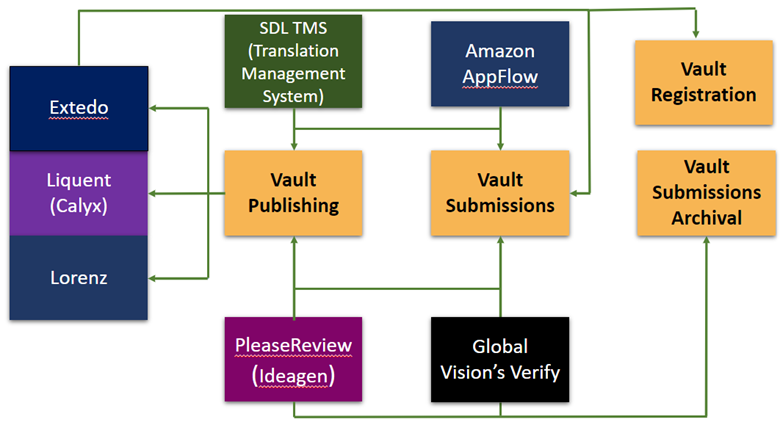
You may also be interested in our other articles:
- Reduce Time for Study Migration into Veeva Vault
- Reducing Submission Time with Veeva Vault RIM – Prana Life Sciences LLC (prana4life.com)
- Veeva Vault Implementation Groundwork – Prana Life Sciences LLC (prana4life.com)
For more information, please Contact Us.
Authors: Bhaskar Kende, Giri Masi-reddy, David Quake
About the Authors: The authors are part of the core solutioning team at Prana Life Sciences, which is a certified Veeva Services Partner.