Computer Software Assurance, abbreviated as CSA, is a new risk-based approach for Pharma manufacturers. This method allows users to focus on areas such as product quality, safety, and speed to market. Computer Systems Validation (CSV), however, is a process that focuses on the documentation of pre-defined system requirements. This makes CSV slow, clunky, and risk-prone as the focus is primarily on meeting regulations.
One can trace the development of CSA back to a 2011 review on the quality of medical device data. The Center for Devices and Radiological Health (CDRH) determined that, based on risks that impacted product quality during the manufacturing processes, it was necessary to identify and implement better manufacturing practices. Some of the risks that were addressed:
- An industry-wide focus on maintaining regulations in place of opting for best practices – a decline in quality for the sake of compliance.
- The absence of automation; The industry was using old, outdated versions of software.
These risks gave rise to the CDRH’s Case for Quality 1. This case was created to implement and incentivize good manufacturing practices and help raise the quality levels of medical devices.
During the Case for Quality campaign, one of the FDA’s most valuable discoveries was that Computer Systems Validation (CSV) was an obstacle in the process. CSV guidelines sometimes pose a risk in businesses – they prioritize documentation which can oftentimes be expensive and a time-sink. This strict formulaic guideline posed a challenge for life sciences organizations.
To address these issues, the CDRH collaborated with the Center for Biologics Evaluation and Research (CBER) and the Center for Drug Evaluation and Research (CDER) and released an updated guidance document in 2021 titled Computer Software Assurance for Manufacturing and Quality System Software2. This was a collaborative effort that shifted the focus of CSV towards critical thinking. This was emphasized by the FDA, in order to have manufacturers spend 80% of their time thinking critically about a project to align assessment and testing processes to high-risk activities. The remaining 20% of their efforts would be spent on documentation. This is in comparison to what was essentially 80% documenting and 20% thinking3.
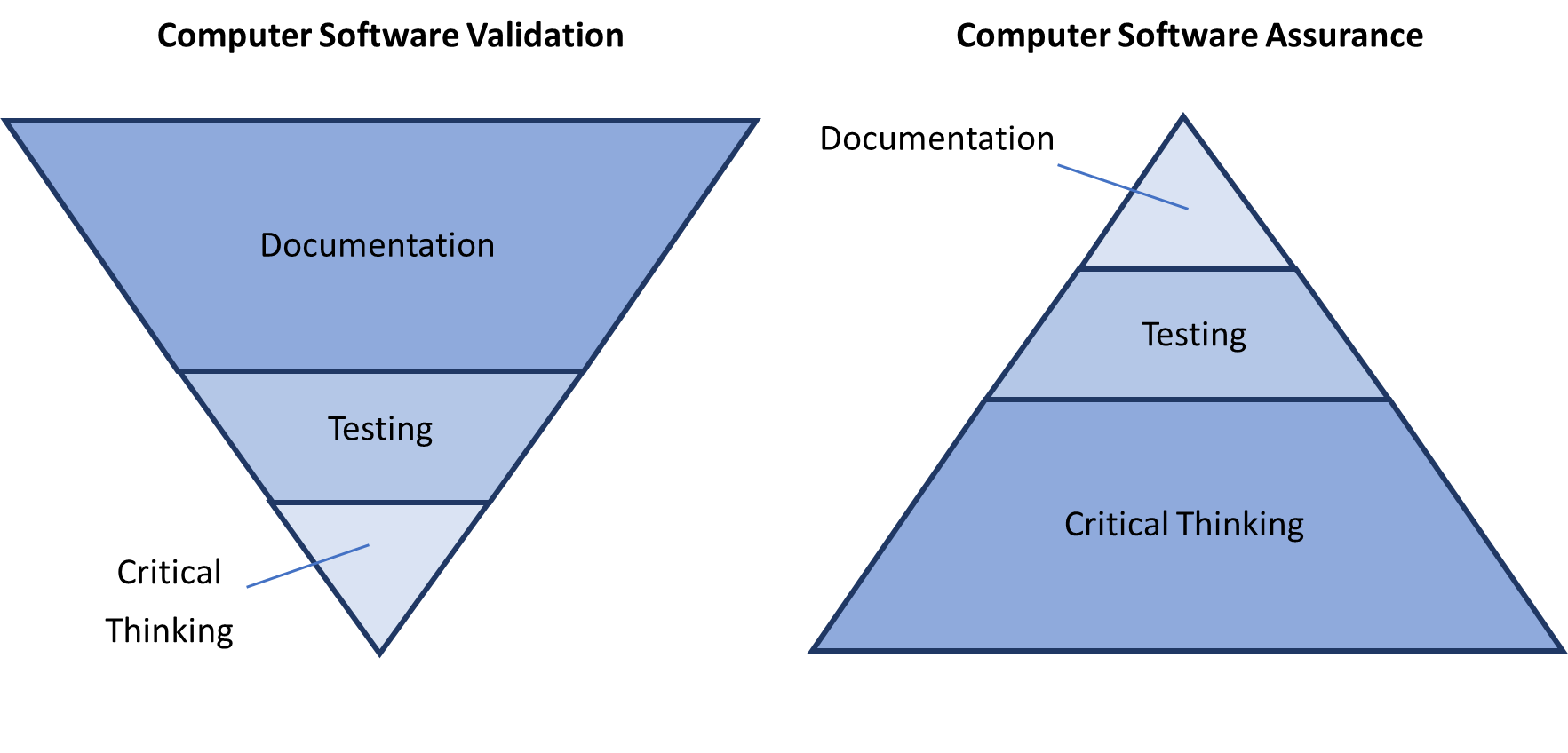
CSA insists that critical thinking ought to take place prior to starting the validation process and that the risk determined should dictate the type of approach to system validation.
Overall, the implementation of CSA aims to give organizations the confidence to implement risk-based validation models that ideally present better quality, less change control, faster development, and ultimately less paperwork.
Bibliography
- Case for Quality | FDA
- Computer Software Assurance (CSA): Why the Change and What Does it Mean? – ADAMAS Consulting
- Computer Software Assurance (CSA): The FDA’s New Approach to CSV – Kalleid
Also Read,
Adopting and transitioning to Computer Systems Assurance (CSA)
Considerations for Making the Change to Computer Software Assurance